
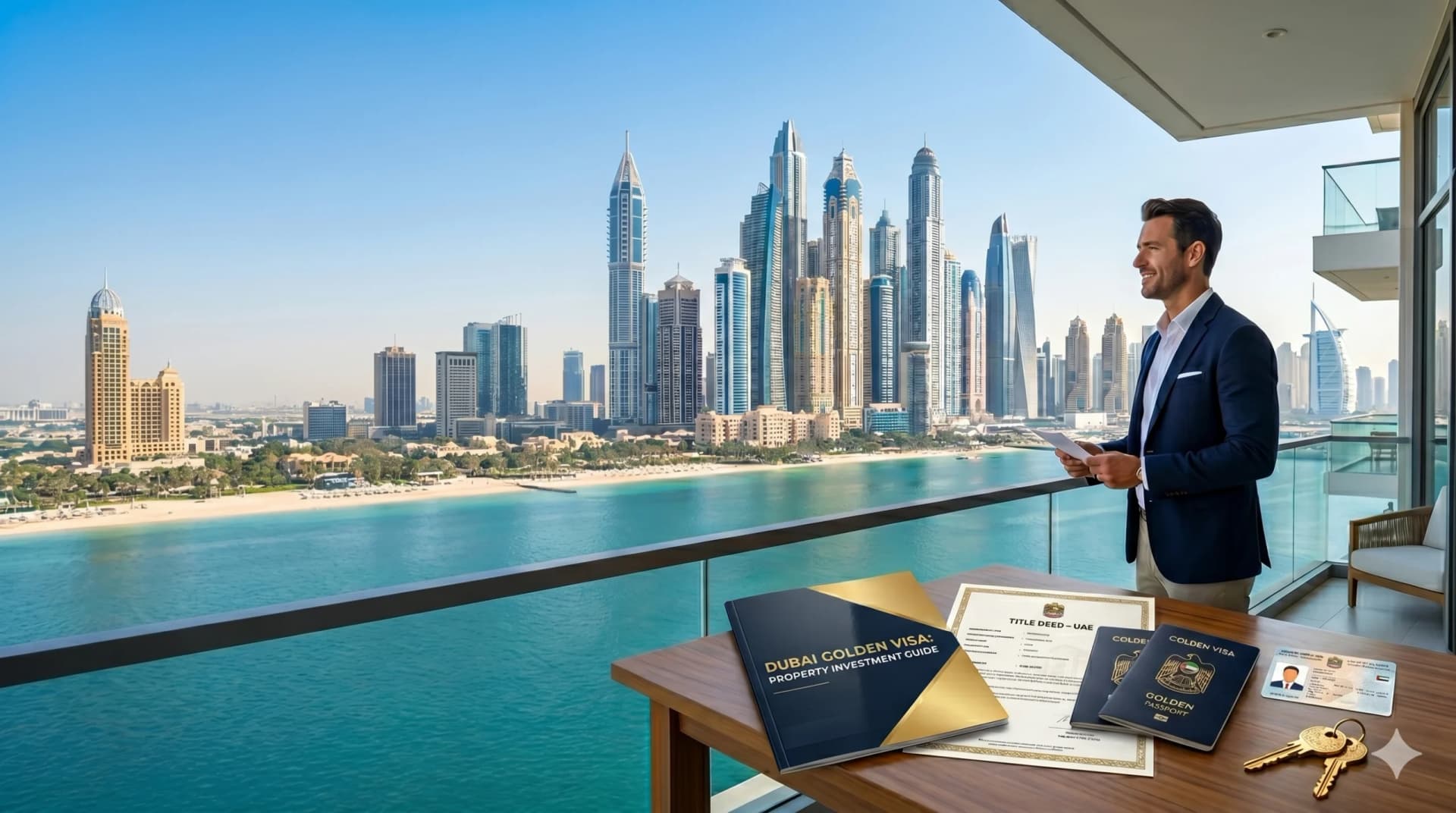
How to Get a Dubai Golden Visa Through Property Investment: The Complete Guide
Introduction
Dubai has firmly established itself as one of the world’s most attractive destinations for investors, entrepreneurs, professionals, and high-net-worth individuals seeking opportunity, stability, and an exceptional quality of life. Among the many incentives the United Arab Emirates offers to draw global talent and capital, the Dubai Golden Visa stands out as one of the most coveted and transformative residency programs available anywhere in the world.
The Golden Visa represents far more than a simple residence permit. It is a long-term residency solution that grants foreign nationals the ability to live, work, study, and conduct business in the UAE without the need for a local sponsor. For many, it embodies a gateway to financial freedom, tax efficiency, world-class infrastructure, and a strategically located global hub bridging East and West.
Among the various pathways to obtaining this prestigious visa, property investment has emerged as one of the most popular and accessible routes. Dubai’s real estate market, with its impressive returns, freehold ownership opportunities for foreigners, and continuous development, has become a magnet for international investors. By purchasing qualifying property, investors can secure long-term residency for themselves and their families while simultaneously building a valuable asset portfolio in one of the world’s most dynamic property markets.
This comprehensive guide is designed to walk you through every aspect of obtaining a Dubai Golden Visa through property investment. Whether you are a seasoned investor exploring international diversification, a professional seeking to relocate, or a family hoping to establish roots in this thriving metropolis, this article will provide you with the detailed knowledge needed to navigate the process successfully.
We will explore the history and evolution of the program, the specific eligibility requirements, the financial thresholds you must meet, the step-by-step application procedure, the documentation involved, the types of properties that qualify, the benefits you can expect, and the potential pitfalls to avoid. By the end of this guide, you will have a thorough understanding of how to leverage Dubai’s real estate market to secure your place among the residents of one of the most exciting cities on Earth.
Understanding the Dubai Golden Visa
What Is the Dubai Golden Visa?
The Dubai Golden Visa is a long-term residency permit introduced by the United Arab Emirates government to attract and retain talented individuals, investors, entrepreneurs, and exceptional professionals. Unlike traditional UAE residence visas, which are typically tied to employment and require periodic renewal every two to three years with the backing of an employer or sponsor, the Golden Visa offers extended validity periods of five or ten years and allows holders to be self-sponsored.
This self-sponsorship feature is revolutionary in the context of the UAE’s historical residency framework. Previously, expatriates living in the Emirates were almost entirely dependent on their employers or family members to maintain their legal status in the country. The introduction of the Golden Visa fundamentally changed this dynamic, granting eligible individuals a sense of permanence and security that was previously unavailable to foreign residents.
The Golden Visa system reflects the UAE’s broader strategic vision to transform itself from an oil-dependent economy into a diversified, knowledge-based, and innovation-driven nation. By offering long-term residency to those who contribute meaningfully to the country’s economic, scientific, cultural, and entrepreneurial landscape, the government aims to position the UAE as a permanent home for global talent rather than merely a temporary destination for expatriate workers.
The Origins and Evolution of the Program
The Golden Visa program was first announced in 2019 as part of the UAE’s ambitious economic reform agenda. The initiative was launched under the directive of the country’s leadership to enhance the nation’s competitiveness on the global stage and to create a more welcoming environment for international investment and talent.
When the program initially rolled out, it focused on a relatively narrow set of categories, including major investors, entrepreneurs with successful ventures, individuals with specialized talents in fields such as science and medicine, and exceptional students. The property investment threshold at the time was set relatively high, requiring substantial capital to qualify.
Over the subsequent years, the program underwent significant revisions and expansions. The UAE government recognized that to maximize the benefits of the initiative, it needed to broaden the eligibility criteria and make the program more accessible to a wider range of qualified individuals. In 2022, a major overhaul of the visa system was introduced, which dramatically reformed the residency framework and made obtaining a Golden Visa through property investment considerably more attainable.
One of the most notable changes was the reduction of the minimum property investment threshold. The previous requirement of a substantial investment was lowered to a more accessible figure, opening the door to a much larger pool of potential investors. Additionally, the rules surrounding mortgaged properties, off-plan purchases, and combined property holdings were clarified and made more flexible, further enhancing the appeal of the real estate route.
These reforms signaled the UAE’s commitment to maintaining its position as a top destination for global capital and demonstrated the government’s responsiveness to market demands and investor feedback. The continuous refinement of the program underscores the dynamic nature of Dubai’s regulatory environment and its willingness to adapt to changing economic realities.
Why the Golden Visa Matters
The significance of the Golden Visa cannot be overstated for those seeking to establish a long-term presence in the UAE. For decades, one of the primary concerns for expatriates living in the country was the inherent uncertainty of their residency status. The constant need to renew visas, the dependency on employers, and the potential loss of residency upon job termination created an atmosphere of impermanence that discouraged long-term planning and investment.
The Golden Visa addresses these concerns head-on by providing a stable, predictable, and self-determined residency status. This stability enables holders to make long-term decisions regarding their careers, businesses, families, and finances with confidence. It allows individuals to invest in property, establish businesses, enroll their children in schools, and build lives in the UAE without the looming threat of sudden displacement.
Furthermore, the Golden Visa enhances the UAE’s attractiveness as a destination for relocation in an increasingly competitive global landscape. As other countries tighten their immigration policies and as global mobility becomes more important for high-net-worth individuals and skilled professionals, the UAE’s offering of long-term residency through accessible pathways like property investment positions it favorably against competing jurisdictions.
The Property Investment Route Explained
Overview of the Real Estate Pathway
The property investment route to the Golden Visa is precisely what its name suggests: a pathway to long-term residency based on the purchase of qualifying real estate in the UAE. This route has become exceptionally popular among foreign investors for several compelling reasons.
First, it combines the dual benefits of securing residency and acquiring a tangible, appreciating asset. Unlike investment routes that require depositing funds or investing in businesses with uncertain outcomes, property investment provides the investor with a physical asset that can generate rental income, appreciate in value, and serve as a personal residence or vacation home.
Second, Dubai’s real estate market is among the most developed and transparent in the region, with strong regulatory oversight, established legal frameworks for foreign ownership, and a robust ecosystem of developers, brokers, and service providers. This maturity provides investors with a degree of confidence and security that may not be available in other emerging markets.
Third, the property route offers flexibility in terms of the types of investments that qualify, the option to combine multiple properties, and the ability to finance purchases through mortgages under certain conditions. This flexibility allows investors to structure their investments in ways that suit their individual financial circumstances and objectives.
The Two Main Tiers of Property-Based Golden Visas
The property investment route to the Golden Visa generally operates across two main tiers, corresponding to the five-year and ten-year visa categories. Understanding the distinction between these tiers is essential for prospective investors planning their entry into the UAE residency system.
The standard tier, which leads to the long-term renewable residency, requires a minimum property investment that has become the benchmark for most real estate investors seeking the Golden Visa. This threshold has been set at a level that balances accessibility with the government’s objective of attracting meaningful investment into the property market.
The investment amount required for this route is calculated based on the value of the property or properties owned by the applicant. The property must meet the minimum value threshold, and the applicant must demonstrate genuine ownership through official documentation. The valuation of the property is typically determined by official channels and the relevant land department to ensure compliance with the program’s requirements.
It is important to note that the specific monetary thresholds and conditions are subject to periodic revision by the UAE authorities. As such, prospective investors should always verify the current requirements through official government sources or qualified legal and immigration advisors before committing to any investment.
Freehold Versus Leasehold Properties
A critical concept that every prospective property investor in Dubai must understand is the distinction between freehold and leasehold ownership. This distinction has significant implications for both the investment itself and the eligibility for the Golden Visa.
Freehold ownership grants the buyer complete and outright ownership of both the property and the land on which it sits, in perpetuity. Foreign nationals are permitted to purchase freehold properties in designated areas of Dubai, which are commonly referred to as freehold zones or designated investment areas. These zones include many of Dubai’s most prestigious and sought-after neighborhoods. Freehold ownership provides the investor with full rights to sell, lease, occupy, or bequeath the property as they see fit.
Leasehold ownership, by contrast, grants the buyer the right to use and occupy the property for a defined period, typically ranging up to ninety-nine years, but does not confer ownership of the underlying land. At the end of the lease period, ownership reverts to the original freehold owner. Leasehold arrangements are less common for foreign buyers seeking Golden Visa eligibility and generally provide fewer rights than freehold ownership.
For the purposes of obtaining a Golden Visa through property investment, freehold ownership in designated areas is the preferred and most straightforward route. Investors should ensure that any property they consider purchasing is located within a recognized freehold zone and that the title deed clearly reflects their ownership rights.
Eligibility Requirements for the Property Investment Golden Visa
General Eligibility Criteria
To qualify for a Golden Visa through property investment, applicants must satisfy a set of eligibility criteria established by the UAE authorities. While the specific requirements may be refined over time, the core criteria have remained relatively consistent and provide a clear framework for prospective applicants.
The fundamental requirement is the ownership of qualifying property valued at or above the minimum investment threshold. The applicant must be the legal owner of the property, as evidenced by an official title deed issued by the relevant land department. The property must be located in a designated freehold area where foreign ownership is permitted.
In addition to the property ownership requirement, applicants must satisfy general admissibility criteria that apply to all UAE residency applications. These include possessing a valid passport with sufficient remaining validity, passing a medical fitness examination conducted at approved health centers, and meeting security and background check requirements. Applicants with serious criminal records or those deemed a security risk may be denied residency regardless of their financial qualifications.
The applicant must also be of legal age, typically eighteen years or older, to apply in their own right as the primary investor. Younger family members can be included as dependents under the primary applicant’s sponsorship, subject to the relevant rules governing family sponsorship.
Property Value Thresholds
The property value threshold is the cornerstone of the eligibility framework for the real estate investment route. The minimum value of property required to qualify for the Golden Visa has been set at a level intended to attract serious investors while remaining accessible to a broad segment of the market.
The applicant must own property whose total value meets or exceeds the established minimum threshold. Importantly, this value is generally assessed based on the purchase price or the official valuation of the property, whichever is applicable according to the prevailing rules. The land department or relevant authority will typically issue documentation confirming the property’s value for visa application purposes.
One of the favorable aspects of the current framework is the ability to combine the value of multiple properties to reach the required threshold. This means that an investor who owns several properties, each valued below the minimum on its own, may aggregate their values to satisfy the requirement. This flexibility allows investors to build a diversified property portfolio while still qualifying for the long-term visa.
It is essential for investors to remain aware that these thresholds can be adjusted by the authorities in response to market conditions and policy objectives. Therefore, confirming the current applicable threshold before making investment decisions is a prudent step.
Conditions Regarding Mortgaged Properties
A common question among prospective investors concerns whether properties purchased with the assistance of a mortgage can qualify for the Golden Visa. The rules surrounding mortgaged properties have evolved to become more accommodating, reflecting the reality that many buyers finance their property purchases through bank loans.
Under the current framework, properties that have been financed through a mortgage can qualify for the Golden Visa, provided that certain conditions are met. Typically, the applicant must have paid a minimum portion of the property’s value, and the mortgage must be obtained from an approved local bank or financial institution. The specific percentage of the value that must be paid upfront, as well as the requirements regarding the lending institution, are determined by the relevant authorities and may be subject to change.
In some cases, the authorities may require a letter from the financing bank confirming the details of the mortgage and the amount paid by the applicant. This documentation helps verify that the investor has a substantial equity stake in the property and that the investment is genuine.
Investors considering financing their property purchase should carefully review the prevailing rules regarding mortgaged properties and consult with their bank and immigration advisors to ensure their financing arrangement is compatible with Golden Visa eligibility.
Off-Plan Property Considerations
Off-plan properties, which are properties purchased before or during their construction phase, represent another category that prospective investors frequently consider. Off-plan purchases are popular in Dubai because they often offer attractive pricing, flexible payment plans, and the potential for significant capital appreciation by the time the property is completed.
The eligibility of off-plan properties for the Golden Visa depends on the specific circumstances and the prevailing rules. Generally, the property must be purchased from approved developers, and the investment must meet the minimum value threshold. In some cases, the authorities may have specific requirements regarding the stage of completion or the documentation needed to demonstrate the investment.
Investors interested in off-plan properties should exercise due diligence in selecting reputable developers with strong track records of delivering projects on time and to the promised specifications. Because off-plan investments carry inherent risks related to construction delays or developer performance, careful selection and verification are paramount.
Financial Requirements and Investment Thresholds
Understanding the Minimum Investment
The financial foundation of the property investment route is the minimum investment threshold that the applicant’s property holdings must meet. This threshold represents the entry point for qualifying for the long-term residency visa and is a critical consideration for anyone planning to pursue this pathway.
The minimum investment amount is denominated in the local currency and corresponds to a specific value in major international currencies. Prospective investors from abroad should account for currency exchange considerations when planning their investment, as fluctuations in exchange rates can affect the effective cost of the investment in their home currency.
The investment threshold has been calibrated to ensure that the program attracts committed investors who are making a substantial financial commitment to the UAE property market. At the same time, the threshold has been set at a level that remains within reach for a significant portion of international investors, particularly when compared to similar residency-by-investment programs in other jurisdictions.
Additional Costs Beyond the Property Purchase
Prospective investors should be aware that the total cost of acquiring property in Dubai and obtaining the Golden Visa extends beyond the purchase price of the property itself. A comprehensive understanding of these additional costs is essential for accurate financial planning.
When purchasing property in Dubai, buyers typically incur a property registration fee payable to the land department. This fee is calculated as a percentage of the property’s purchase price and represents a significant transaction cost that must be factored into the overall budget.
In addition to the registration fee, buyers often pay agency or brokerage commissions to the real estate agents who facilitate the transaction. These commissions are also typically calculated as a percentage of the purchase price and add to the total cost of acquisition.
Other transaction-related costs may include fees for the issuance of the title deed, administrative charges, and, in the case of mortgaged purchases, mortgage registration fees and bank processing charges. Buyers of off-plan properties may encounter different fee structures, including payments tied to construction milestones.
Beyond the property transaction itself, the Golden Visa application process involves its own set of fees. These include application processing fees, medical examination fees, Emirates ID card fees, and visa issuance fees. When family members are included as dependents, additional fees apply for each dependent.
Investors should also consider ongoing costs associated with property ownership, such as service charges, maintenance fees, and, if the property is leased to tenants, property management fees. These recurring expenses affect the net return on the investment and should be incorporated into the investor’s financial projections.
Proof of Funds and Source of Wealth
As part of the application process and in line with international standards for combating money laundering and financial crime, applicants may be required to demonstrate the legitimate source of the funds used to purchase the property. This requirement is designed to ensure that the investment originates from lawful sources and that the applicant is not engaged in illicit financial activities.
Applicants should be prepared to provide documentation supporting the source of their funds, which may include bank statements, evidence of income, proof of business ownership, records of asset sales, or other relevant financial documentation. The thoroughness of these checks reflects the UAE’s commitment to maintaining the integrity of its financial system and its real estate market.
Engaging with reputable financial institutions and maintaining clear records of the origin and movement of funds will facilitate a smoother application process and help avoid delays or complications related to source-of-funds verification.
The Step-by-Step Application Process
Step One: Research and Planning
The journey toward obtaining a Golden Visa through property investment begins with thorough research and careful planning. This initial phase is arguably the most important, as the decisions made here will shape the entire investment and residency experience.
During this phase, prospective investors should educate themselves about the Dubai real estate market, the various neighborhoods and developments available, the prevailing prices and trends, and the specific requirements for Golden Visa eligibility. Understanding the market landscape enables investors to make informed decisions that align with their financial objectives and residency goals.
This is also the time to establish a clear budget, taking into account not only the property purchase price but also the additional transaction costs, application fees, and ongoing ownership expenses discussed earlier. Investors should determine how they intend to finance the purchase, whether through cash, mortgage financing, or a combination of both.
Engaging qualified professionals at this stage can be invaluable. Reputable real estate agents, legal advisors, and immigration consultants can provide expert guidance, help identify suitable properties, and ensure that the investor’s plans are compatible with the eligibility requirements.
Step Two: Selecting and Purchasing the Property
Once the research and planning phase is complete, the investor proceeds to identify and select a suitable property. This involves viewing properties, evaluating their location, condition, potential for appreciation, and suitability for the investor’s purposes, whether for personal use, rental income, or capital growth.
When a suitable property is identified, the investor enters into negotiations with the seller or developer to agree on the purchase price and terms. It is advisable to conduct due diligence on the property at this stage, verifying the ownership status, ensuring there are no outstanding liabilities or encumbrances, and confirming that the property is located within a designated freehold area.
Upon reaching an agreement, the parties typically sign a sale and purchase agreement, which sets out the terms of the transaction. For ready properties, the buyer usually pays a deposit at this point, with the balance due upon transfer of ownership. For off-plan properties, the payment structure follows the developer’s payment plan, often tied to construction milestones.
The transfer of ownership is completed at the land department, where the title deed is issued in the buyer’s name. This title deed is the official document evidencing the buyer’s ownership of the property and serves as the foundational document for the Golden Visa application.
Step Three: Obtaining the Property Valuation Certificate
For the purposes of the Golden Visa application, the investor typically needs to obtain a property valuation certificate or equivalent documentation confirming that the property meets the minimum value threshold. This certificate is issued by the relevant land department or authorized valuation body.
The valuation certificate provides official confirmation of the property’s value, which is a key requirement for demonstrating eligibility. The investor should ensure that the valuation reflects a figure at or above the minimum threshold and that the documentation is in order before proceeding with the visa application.
In cases where multiple properties are being combined to reach the threshold, the investor may need to obtain valuation documentation for each property and demonstrate that their combined value satisfies the requirement.
Step Four: Submitting the Golden Visa Application
With the property purchased and the necessary valuation documentation obtained, the investor proceeds to submit the Golden Visa application. The application can typically be submitted through various official channels, including online government portals, authorized service centers, or with the assistance of immigration consultants.
The application requires the submission of various supporting documents, which we will discuss in detail in the documentation section. These documents establish the applicant’s identity, property ownership, financial standing, and admissibility for residency.
The application is reviewed by the relevant authorities, who verify the applicant’s eligibility and the authenticity of the submitted documentation. The processing time can vary depending on the volume of applications and the completeness of the submission, but the authorities have made significant efforts to streamline and expedite the process.
Step Five: Medical Examination and Emirates ID
As part of the residency process, the applicant must undergo a medical fitness examination at an approved health center in the UAE. This examination typically includes screening for certain communicable diseases and confirms that the applicant meets the health requirements for residency.
Following the medical examination, the applicant applies for an Emirates ID, which is the official identification card issued to all UAE residents. The Emirates ID is an essential document that is used for a wide range of purposes, including accessing government services, opening bank accounts, and conducting various transactions within the country.
The biometric data, including fingerprints and a photograph, are captured as part of the Emirates ID application process. The applicant must visit an authorized center to complete this step.
Step Six: Visa Issuance and Stamping
Once the application has been approved and all the required steps have been completed, the Golden Visa is issued. In the past, visas were typically stamped into the applicant’s passport, but the UAE has increasingly moved toward digital visa systems, where the residency is recorded electronically and linked to the Emirates ID.
Upon issuance of the visa, the applicant officially becomes a long-term resident of the UAE, with all the rights and privileges that the Golden Visa confers. The visa is typically valid for the designated period of five or ten years, depending on the category, and is renewable upon expiration, subject to continued compliance with the eligibility requirements.
Step Seven: Sponsoring Family Members
After obtaining their own Golden Visa, the primary investor can proceed to sponsor their family members, including their spouse and children, as dependents. The process for sponsoring family members involves submitting additional applications and documentation for each dependent, along with the applicable fees.
The ability to sponsor family members is one of the most valued benefits of the Golden Visa, as it allows the investor to bring their loved ones to the UAE and establish a family home in the country. We will explore the details of family sponsorship in a dedicated section later in this guide.
Required Documentation
Core Documents for the Primary Applicant
The Golden Visa application requires a comprehensive set of documents to establish the applicant’s eligibility and admissibility. While the exact list may vary depending on the specific circumstances and any updates to the requirements, the core documents generally include the following.
The applicant’s valid passport is a fundamental requirement, and it must have sufficient remaining validity to cover the visa period or at least the minimum required validity stipulated by the authorities. A clear copy of the passport’s biographical page is typically required, along with the original for verification purposes.
Passport-sized photographs that meet the specifications set by the authorities are required for the application and for the Emirates ID. These photographs must conform to standards regarding size, background color, and composition.
The title deed for the property is a central document for the property investment route. This official document, issued by the land department, evidences the applicant’s ownership of the qualifying property and is essential for demonstrating eligibility.
A property valuation certificate or equivalent documentation confirming that the property meets the minimum value threshold is also required, as discussed earlier.
Financial and Supporting Documents
Depending on the circumstances, the applicant may be required to provide various financial documents to support their application. These may include bank statements demonstrating the applicant’s financial standing and the source of funds used for the property purchase.
In the case of mortgaged properties, a letter from the financing bank confirming the details of the mortgage, the amount paid by the applicant, and the outstanding balance may be required. This documentation helps verify the applicant’s equity stake in the property.
For investors combining multiple properties to reach the threshold, documentation for each property, including title deeds and valuation certificates, must be provided to demonstrate that the combined value satisfies the requirement.
Personal and Background Documents
The application typically requires documents related to the applicant’s personal background and admissibility. This may include a certificate of good conduct or police clearance certificate, demonstrating that the applicant does not have a disqualifying criminal record.
The medical fitness certificate, obtained following the medical examination at an approved health center, confirms that the applicant meets the health requirements for residency.
Depending on the applicant’s circumstances and the prevailing requirements, additional documents may be requested. These could include proof of address, evidence of relationships for family sponsorship, or other documentation specific to the applicant’s situation.
Documents for Family Members
When sponsoring family members as dependents, additional documentation is required for each dependent. For a spouse, a marriage certificate is typically required to establish the marital relationship. The marriage certificate may need to be attested or legalized depending on its country of origin.
For children, birth certificates are required to establish the parent-child relationship. As with marriage certificates, birth certificates may need to be attested or legalized. Passports and photographs for each dependent are also required, along with medical fitness certificates for dependents above a certain age.
The attestation and legalization of foreign documents can be a time-consuming process, so applicants should plan ahead and ensure that all necessary documents are properly attested well in advance of the application.
Types of Qualifying Properties
Residential Properties
Residential properties constitute the most common category of qualifying investments for the Golden Visa. These include apartments, villas, townhouses, and other residential dwellings located in designated freehold areas of Dubai.
Apartments are perhaps the most popular choice among investors, particularly those seeking rental income or a pied-à-terre in the city. Dubai offers a vast range of apartment options, from compact studios to expansive penthouses, across various price points and neighborhoods. The diversity of the apartment market allows investors to find options that meet the minimum value threshold while aligning with their budget and preferences.
Villas and townhouses appeal to investors seeking larger residences, often for personal or family use, or for renting to families seeking spacious accommodations. These properties typically command higher prices and may offer greater potential for capital appreciation in well-located communities.
When selecting a residential property, investors should consider factors such as location, the reputation of the developer, the quality of construction, the availability of amenities, and the potential for rental income and capital growth.
Commercial Properties
Commercial properties, such as office spaces, retail units, and other commercial real estate, may also qualify for the Golden Visa under certain conditions. Investing in commercial property can offer attractive rental yields and the potential for stable, long-term income, particularly in prime business districts.
However, investors considering commercial properties should be aware that the rules and conditions for commercial property investment may differ from those for residential property. The eligibility of commercial properties for the Golden Visa should be verified with the relevant authorities or advisors before proceeding.
Commercial property investment also requires a different set of considerations, including understanding the commercial leasing market, tenant demand, and the specific dynamics of the commercial real estate sector in Dubai.
Off-Plan and Under-Construction Properties
As discussed earlier, off-plan and under-construction properties can qualify for the Golden Visa, subject to specific conditions. These properties are purchased before or during their construction phase and offer the potential for attractive pricing and capital appreciation.
Off-plan investments are particularly popular among investors seeking to enter the market at lower price points and benefit from the appreciation that often occurs as a project nears completion. Developers frequently offer flexible payment plans for off-plan properties, allowing buyers to spread their payments over the construction period.
The key considerations for off-plan investments include the reputation and track record of the developer, the projected completion date, the payment structure, and the specific eligibility conditions for the Golden Visa. Because off-plan investments carry inherent risks, thorough due diligence is essential.
Combining Multiple Properties
One of the favorable features of the current Golden Visa framework is the ability to combine the value of multiple properties to reach the minimum investment threshold. This flexibility allows investors to build a diversified property portfolio while still qualifying for the long-term visa.
For example, an investor might own two or more properties, each valued below the minimum threshold individually, but whose combined value meets or exceeds the requirement. By aggregating the values of these properties, the investor can satisfy the eligibility criteria.
This option provides investors with greater flexibility in structuring their investments and allows them to diversify across different property types, locations, and price points. However, investors should ensure that all the properties being combined meet the requirements for qualifying properties and that the necessary documentation is in order for each.
Benefits of the Dubai Golden Visa
Long-Term Residency Security
The most fundamental benefit of the Golden Visa is the long-term residency security it provides. With validity periods of five or ten years and the ability to renew, the Golden Visa offers a stability and permanence that was previously unavailable to expatriates in the UAE.
This security enables holders to make long-term decisions regarding their lives, careers, businesses, and families with confidence. The freedom from the constant cycle of visa renewals and the dependency on employers represents a significant improvement in the quality of life and peace of mind for residents.
The long-term nature of the visa also facilitates long-term planning and investment. Holders can confidently invest in property, establish businesses, and build assets in the UAE, knowing that their residency status is secure.
Self-Sponsorship and Independence
The Golden Visa’s self-sponsorship feature liberates holders from the need for an employer or local sponsor to maintain their residency status. This independence is particularly valuable for entrepreneurs, investors, and self-employed professionals who do not have a traditional employer relationship.
Self-sponsorship also provides holders with greater freedom in their professional lives. They can change jobs, start businesses, or pursue various professional opportunities without jeopardizing their residency status. This flexibility is a significant advantage in an increasingly dynamic and entrepreneurial economy.
Family Sponsorship Benefits
The Golden Visa allows holders to sponsor their family members, including spouses and children, as dependents. This benefit enables investors to bring their families to the UAE and establish a family home in the country.
Notably, the rules for family sponsorship under the Golden Visa are more favorable than those for standard residency visas in certain respects. For example, the Golden Visa allows for the sponsorship of children up to a higher age limit than standard visas, and it provides greater flexibility regarding the sponsorship of dependents.
The ability to sponsor domestic staff, such as household workers, is another benefit available to Golden Visa holders, subject to the applicable rules and conditions.
Extended Stay Outside the UAE
One of the practical advantages of the Golden Visa is the flexibility it provides regarding time spent outside the UAE. Under standard residency visas, residents typically risk losing their residency status if they remain outside the country for an extended continuous period, often six months.
The Golden Visa, however, allows holders to remain outside the UAE for longer periods without losing their residency status. This flexibility is particularly valuable for individuals with international business interests, frequent travelers, or those who divide their time between multiple countries.
This benefit accommodates the lifestyles of globally mobile individuals and provides them with the freedom to maintain their UAE residency while pursuing opportunities and commitments around the world.
Access to Services and Opportunities
Golden Visa holders enjoy access to a wide range of services and opportunities in the UAE. As residents, they can open bank accounts, obtain driving licenses, access healthcare services, and enroll their children in schools and universities.
The Golden Visa also facilitates business activities, allowing holders to establish and operate businesses, invest in various sectors, and participate in the UAE’s dynamic economy. The residency status enhances the holder’s credibility and standing in business and financial dealings within the country.
Additionally, the Golden Visa can serve as a gateway to the broader Gulf region and beyond. The UAE’s strategic location and extensive connectivity make it an ideal base for individuals and businesses seeking to access markets in the Middle East, Africa, Asia, and Europe.
Tax Advantages
One of the most compelling attractions of establishing residency in the UAE is the favorable tax environment. The UAE has historically been known for its absence of personal income tax, which means that individuals do not pay tax on their salaries, wages, or other personal income.
For investors and high-net-worth individuals, the absence of personal income tax can result in significant tax savings compared to many other jurisdictions. This tax efficiency is a major draw for those seeking to optimize their financial situation.
It is important to note, however, that the UAE has introduced certain taxes in recent years, including a value-added tax on goods and services and a corporate tax on business profits above certain thresholds. Investors should familiarize themselves with the current tax framework and consult with tax advisors to understand the implications for their specific circumstances. Additionally, investors should consider the tax rules in their home country and any applicable tax treaties.
Quality of Life and Lifestyle
Beyond the practical and financial benefits, the Golden Visa provides access to the exceptional quality of life that Dubai and the broader UAE offer. The city is renowned for its world-class infrastructure, modern amenities, safety and security, cultural diversity, and abundance of leisure and entertainment options.
Dubai offers a cosmopolitan lifestyle with luxury shopping, fine dining, pristine beaches, vibrant cultural scenes, and a wide range of recreational activities. The city’s commitment to safety and its low crime rate make it an attractive destination for families and individuals seeking a secure environment.
The UAE’s investment in healthcare and education has resulted in high-quality medical facilities and reputable international schools and universities. These amenities enhance the appeal of the country as a place to live and raise a family.
Family Sponsorship Under the Golden Visa
Sponsoring a Spouse
One of the most significant benefits of the Golden Visa is the ability to sponsor family members. The primary investor, upon obtaining their Golden Visa, can sponsor their spouse as a dependent. This allows the spouse to reside in the UAE under the same long-term residency framework.
To sponsor a spouse, the primary investor must provide documentation establishing the marital relationship, typically in the form of a marriage certificate. The marriage certificate may need to be attested or legalized depending on its country of origin, to be recognized by the UAE authorities.
The sponsored spouse enjoys residency status linked to the primary investor’s Golden Visa, with the validity period generally aligned with that of the primary visa. This arrangement provides families with stability and the ability to live together in the UAE.
Sponsoring Children
The Golden Visa allows the primary investor to sponsor their children as dependents. One of the favorable aspects of the Golden Visa is the more generous age limits for sponsoring children compared to standard residency visas.
Under the Golden Visa framework, children can be sponsored up to a higher age limit, and in some cases, there may be provisions for sponsoring unmarried daughters and children with disabilities without the same age restrictions. These provisions reflect the family-friendly orientation of the program.
To sponsor children, the primary investor must provide birth certificates establishing the parent-child relationship, along with the children’s passports and photographs. As with marriage certificates, birth certificates from foreign countries may need to be attested or legalized.
Sponsoring Parents and Domestic Staff
In addition to spouses and children, Golden Visa holders may have the ability to sponsor their parents and domestic staff, subject to the applicable rules and conditions. Sponsoring parents allows holders to bring their elderly parents to the UAE and provide for their care and well-being.
Sponsoring domestic staff, such as household workers, is another option available to Golden Visa holders. This allows holders to employ and sponsor domestic workers to assist with household responsibilities, subject to the relevant labor and immigration regulations.
The specific requirements and conditions for sponsoring parents and domestic staff should be verified with the relevant authorities, as they may be subject to particular criteria and documentation requirements.
The Importance of Document Attestation
A critical aspect of family sponsorship is the attestation and legalization of foreign documents, such as marriage certificates and birth certificates. These documents must be properly attested to be recognized by the UAE authorities.
The attestation process typically involves several steps, including authentication by the relevant authorities in the document’s country of origin, legalization by the UAE embassy or consulate in that country, and final attestation by the relevant UAE authorities. This process can be time-consuming, so applicants should plan ahead and initiate the attestation process well in advance.
Engaging professional services to assist with document attestation can streamline the process and help avoid delays. Ensuring that all necessary documents are properly attested before submitting the family sponsorship applications is essential for a smooth process.
Costs and Fees Associated with the Golden Visa
Property Transaction Costs
The total cost of obtaining a Golden Visa through property investment encompasses various components, beginning with the property transaction costs. The most significant of these is the property purchase price, which must meet the minimum value threshold.
In addition to the purchase price, buyers incur a property registration fee payable to the land department, calculated as a percentage of the purchase price. This fee represents a substantial transaction cost that must be factored into the budget.
Real estate agency or brokerage commissions are another component of the transaction costs, typically calculated as a percentage of the purchase price. These commissions compensate the agents who facilitate the transaction.
Other transaction-related costs may include fees for the issuance of the title deed, administrative charges, and, in the case of mortgaged purchases, mortgage registration fees and bank processing charges.
Visa Application Fees
The Golden Visa application process involves its own set of fees, separate from the property transaction costs. These include the application processing fee, which covers the administrative cost of processing the application.
Medical examination fees are incurred for the medical fitness examination required as part of the residency process. The Emirates ID card fee covers the issuance of the Emirates ID, which is an essential document for all UAE residents.
Visa issuance fees cover the actual issuance of the Golden Visa. When family members are included as dependents, additional fees apply for each dependent, including their own medical examination, Emirates ID, and visa issuance fees.
Ongoing Ownership Costs
Beyond the initial acquisition and visa costs, property owners incur ongoing costs associated with property ownership. Service charges and maintenance fees are levied on properties to cover the maintenance and upkeep of common areas and facilities. These charges are typically calculated based on the size of the property and the amenities provided.
If the property is leased to tenants, the owner may incur property management fees if they engage a property management company to handle the leasing and management of the property. These fees compensate the management company for their services in finding tenants, collecting rent, and maintaining the property.
Other ongoing costs may include utility charges, insurance, and any applicable taxes or fees. Investors should factor these recurring expenses into their financial projections to accurately assess the net return on their investment.
Professional Service Fees
Many investors engage professional services to assist with the property purchase and Golden Visa application process. These may include legal advisors, immigration consultants, and real estate agents.
Legal advisors can provide valuable guidance on the legal aspects of the property purchase and the visa application, helping to ensure compliance with the relevant laws and regulations. Immigration consultants specialize in navigating the visa application process and can streamline the process and help avoid pitfalls.
While engaging professional services involves additional costs, the expertise and guidance they provide can be invaluable, particularly for investors who are unfamiliar with the UAE’s legal and regulatory environment. The fees for professional services vary depending on the scope of the services provided and the specific professionals engaged.
The Renewal Process
Understanding Visa Validity and Renewal
The Golden Visa is issued for a specific validity period, typically five or ten years depending on the category. As the expiration of the visa approaches, holders must undertake the renewal process to maintain their residency status.
The renewal process generally requires the holder to demonstrate continued compliance with the eligibility requirements. For the property investment route, this means that the holder must continue to own qualifying property valued at or above the minimum threshold.
The renewal process is generally straightforward for holders who maintain their eligibility. It typically involves submitting a renewal application, providing updated documentation, and paying the applicable renewal fees.
Maintaining Eligibility for Renewal
To ensure a smooth renewal process, Golden Visa holders should maintain their eligibility throughout the validity period. For property investors, this means retaining ownership of the qualifying property and ensuring that its value continues to meet the minimum threshold.
If a holder sells their qualifying property without acquiring a replacement property that meets the requirements, they may jeopardize their eligibility for renewal. Therefore, holders should carefully consider the implications for their residency status before selling or disposing of their qualifying property.
In cases where the property’s value may have changed, holders should verify that their property holdings continue to meet the threshold and obtain updated valuation documentation if necessary.
The Renewal Application
The renewal application typically involves submitting updated documentation, including a current title deed, an updated property valuation certificate, and other supporting documents. The holder may also need to undergo a renewed medical examination and update their Emirates ID.
The renewal application is reviewed by the relevant authorities, who verify the holder’s continued eligibility. Upon approval, the Golden Visa is renewed for a further validity period, and the holder’s residency status is maintained.
The renewal of family members’ visas is generally aligned with the renewal of the primary holder’s visa, ensuring that the family’s residency status remains synchronized.
Common Mistakes and How to Avoid Them
Insufficient Due Diligence on the Property
One of the most common mistakes investors make is failing to conduct adequate due diligence on the property they intend to purchase. This can lead to problems such as discovering that the property does not qualify for the Golden Visa, that there are outstanding liabilities or encumbrances, or that the property’s value does not meet the minimum threshold.
To avoid this mistake, investors should thoroughly verify the property’s status, including confirming that it is located within a designated freehold area, that the title is clear, and that the property’s value meets the requirement. Engaging legal advisors and conducting proper due diligence can help identify and address potential issues before completing the purchase.
Misunderstanding the Eligibility Requirements
Another common mistake is misunderstanding or being unaware of the specific eligibility requirements for the Golden Visa. The requirements can be nuanced, and they are subject to periodic revision by the authorities.
Investors who proceed based on outdated or incorrect information may find that their investment does not qualify for the visa, leading to disappointment and financial loss. To avoid this, investors should verify the current requirements through official government sources or qualified advisors before making investment decisions.
Overlooking Additional Costs
Many investors focus solely on the property purchase price and overlook the additional costs associated with the transaction and the visa application. These additional costs, including registration fees, commissions, application fees, and ongoing ownership costs, can be substantial and significantly affect the overall budget.
To avoid being caught off guard by these costs, investors should develop a comprehensive budget that accounts for all the associated expenses. This thorough financial planning will help ensure that the investor has sufficient funds to complete the transaction and the visa application without financial strain.
Choosing Unreliable Developers for Off-Plan Properties
For investors considering off-plan properties, a common mistake is selecting unreliable or unproven developers. Off-plan investments carry inherent risks related to construction delays, quality issues, or developer default.
To mitigate these risks, investors should carefully research and select reputable developers with strong track records of delivering projects on time and to the promised specifications. Verifying the developer’s reputation, financial stability, and history of completed projects can help reduce the risk of problems with off-plan investments.
Neglecting Document Attestation
For family sponsorship, neglecting to properly attest foreign documents such as marriage certificates and birth certificates is a common mistake that can cause delays. The attestation process can be time-consuming, and failing to complete it in advance can hold up the family sponsorship applications.
To avoid delays, investors should initiate the document attestation process well in advance and ensure that all necessary documents are properly attested before submitting the family sponsorship applications. Engaging professional services to assist with attestation can help streamline the process.
Failing to Plan for Renewal
Some holders fail to plan for the renewal of their Golden Visa, which can result in lapses in their residency status. Failing to maintain eligibility, such as by selling the qualifying property without a replacement, can jeopardize the renewal.
To avoid this, holders should be mindful of their eligibility requirements throughout the validity period and plan for the renewal process in advance. Maintaining ownership of qualifying property and keeping documentation up to date will facilitate a smooth renewal.
Comparing the Golden Visa to Other Residency Programs
The UAE Golden Visa Versus Standard Residency Visas
The Golden Visa offers several advantages over standard UAE residency visas. Standard residency visas are typically tied to employment and require periodic renewal every two to three years with the backing of an employer or sponsor. They also impose restrictions on the time that can be spent outside the country and provide less favorable family sponsorship terms.
The Golden Visa, by contrast, offers extended validity periods of five or ten years, self-sponsorship, more flexible rules regarding time spent abroad, and more generous family sponsorship provisions. These advantages make the Golden Visa a significantly more attractive option for those who qualify and seek long-term stability in the UAE.
Comparison with Global Residency-by-Investment Programs
The UAE Golden Visa can be compared to residency-by-investment programs offered by various countries around the world. Many countries offer pathways to residency or citizenship in exchange for investment in property, businesses, or government bonds.
When compared to these programs, the UAE Golden Visa offers several distinctive advantages. The UAE’s favorable tax environment, with the absence of personal income tax, is a major draw that many competing jurisdictions cannot match. The UAE’s strategic location, world-class infrastructure, and high quality of life further enhance its appeal.
The property investment threshold for the UAE Golden Visa is competitive compared to similar programs in other jurisdictions, particularly when considering the additional benefits and the quality of the investment opportunity. The maturity and transparency of Dubai’s real estate market provide investors with a degree of confidence and security.
However, it is important to note that the UAE Golden Visa is a residency program, not a citizenship program. Unlike some programs that offer a pathway to citizenship, the Golden Visa provides long-term residency. Investors seeking citizenship should explore other options, although the UAE has introduced limited pathways to citizenship for certain exceptional individuals.
Weighing the Pros and Cons
When evaluating the Golden Visa against other residency options, investors should weigh the various pros and cons in light of their individual circumstances and objectives. The Golden Visa’s advantages include long-term residency, self-sponsorship, favorable tax treatment, family sponsorship, and access to the UAE’s exceptional quality of life and economic opportunities.
The considerations to weigh include the investment threshold, the additional costs involved, the fact that it is a residency rather than a citizenship program, and the need to maintain eligibility for renewal. By carefully considering these factors, investors can determine whether the Golden Visa aligns with their goals and represents the right choice for their situation.
Investment Hotspots in Dubai
Prime Residential Areas
Dubai offers a diverse range of neighborhoods and developments that attract property investors seeking Golden Visa eligibility. Among the most prominent are the prime residential areas that have established themselves as premier destinations for luxury living and investment.
Downtown Dubai, home to iconic landmarks and a vibrant urban lifestyle, is one of the most sought-after locations. The area offers a range of high-end apartments and is known for its proximity to world-class shopping, dining, and entertainment options. Properties in Downtown Dubai tend to command premium prices and offer strong potential for rental income and capital appreciation.
Dubai Marina is another popular destination, renowned for its waterfront living, stunning skyline views, and vibrant atmosphere. The area offers a wide range of apartments and is particularly popular among young professionals and those seeking a dynamic urban lifestyle.
Palm Jumeirah, the iconic man-made island, is synonymous with luxury and exclusivity. The area offers high-end villas and apartments with beachfront access and stunning views, attracting investors seeking premium properties and a prestigious address.
Emerging and Value Areas
In addition to the established prime areas, Dubai offers emerging and value areas that present attractive investment opportunities. These areas often offer more affordable entry points and the potential for significant capital appreciation as they develop and mature.
Areas undergoing significant development and infrastructure improvements can offer investors the opportunity to enter the market at lower price points and benefit from future growth. These emerging areas may also offer attractive rental yields, particularly as they attract residents seeking more affordable housing options.
Investors interested in value areas should research the development plans, infrastructure projects, and growth prospects for the areas under consideration. Identifying areas with strong growth potential can offer attractive returns over the long term.
Considerations for Location Selection
When selecting a location for property investment, investors should consider various factors that affect both the investment return and the suitability of the property for their purposes. These factors include the proximity to amenities, transportation links, schools, and business districts.
The potential for rental income and capital appreciation is a key consideration for investors seeking returns on their investment. Areas with strong rental demand and growth prospects offer the potential for attractive returns. The reputation and quality of the development and the developer are also important considerations.
For investors planning to use the property for personal use, the lifestyle and amenities offered by the area are important considerations. The choice of location should align with the investor’s preferences and lifestyle requirements.
Return on Investment Considerations
Rental Yields in Dubai
One of the attractions of investing in Dubai real estate is the potential for attractive rental yields. Dubai has historically offered rental yields that are competitive with, and in many cases superior to, those available in other major global cities.
Rental yields vary depending on factors such as the location, type, and quality of the property, as well as market conditions. Areas with strong rental demand and more affordable property prices may offer higher rental yields, while premium areas with higher property prices may offer lower yields but greater potential for capital appreciation.
Investors seeking rental income should research the rental market in the areas under consideration, including the prevailing rental rates, occupancy levels, and demand trends. Understanding the rental market dynamics will help investors assess the potential rental income and yield of a property.
Capital Appreciation Potential
In addition to rental income, investors in Dubai real estate may benefit from capital appreciation as property values increase over time. Dubai’s real estate market has experienced significant growth and development, and well-located properties have the potential for substantial capital appreciation.
Capital appreciation is influenced by various factors, including the overall health of the real estate market, the supply and demand dynamics in specific areas, infrastructure development, and broader economic conditions. Areas undergoing development and improvement may offer greater potential for capital appreciation.
Investors should adopt a long-term perspective when considering capital appreciation, as real estate markets can experience fluctuations over the short term. A focus on well-located, quality properties in areas with strong growth prospects can enhance the potential for capital appreciation over time.
Market Trends and Cycles
Like all real estate markets, Dubai’s property market experiences trends and cycles. Understanding these market dynamics is important for investors seeking to make informed investment decisions and optimize their returns.
The Dubai real estate market has experienced periods of growth and consolidation over the years, influenced by factors such as economic conditions, supply and demand, government policies, and global events. Investors should research current market conditions and trends to inform their investment timing and decisions.
While timing the market perfectly is challenging, investors can benefit from understanding the broader market trends and adopting a strategy that aligns with their investment horizon and objectives. A long-term investment perspective can help investors weather short-term market fluctuations and benefit from the long-term growth of the market.
Balancing Investment and Residency Objectives
For investors pursuing the Golden Visa through property investment, it is important to balance the investment objectives with the residency objectives. While the primary goal may be to obtain the Golden Visa, the investment should also be sound from a financial perspective.
Investors should seek properties that not only meet the eligibility requirements for the Golden Visa but also represent attractive investments with the potential for rental income and capital appreciation. By carefully selecting properties that align with both objectives, investors can maximize the value of their investment.
It is advisable to avoid making investment decisions based solely on the desire to obtain the visa, without due consideration of the investment merits of the property. A balanced approach that considers both the residency and investment objectives will yield the best outcomes.
Legal Considerations and Regulatory Framework
The Legal Framework for Foreign Property Ownership
Dubai has established a comprehensive legal framework governing foreign property ownership, which provides clarity and security for foreign investors. The framework defines the areas in which foreign nationals can own freehold property and sets out the rights and obligations of property owners.
Foreign nationals are permitted to own freehold property in designated areas, which are clearly defined by the authorities. Within these areas, foreign owners enjoy full ownership rights, including the right to sell, lease, occupy, and bequeath their property.
The legal framework also provides for the registration of property ownership and the issuance of title deeds, which serve as official evidence of ownership. The regulatory oversight provided by the relevant authorities helps ensure the integrity and transparency of the property market.
The Role of the Land Department
The land department plays a central role in the property ownership and registration process in Dubai. The department is responsible for registering property transactions, issuing title deeds, and maintaining records of property ownership.
When purchasing property, the transfer of ownership is completed at the land department, where the title deed is issued in the buyer’s name. The land department also provides property valuation services and issues valuation certificates, which are required for the Golden Visa application.
The land department’s role in overseeing property transactions and maintaining ownership records provides investors with confidence and security in their property investments. The department’s services and processes are designed to facilitate transparent and secure property transactions.
Regulatory Oversight of the Real Estate Sector
The real estate sector in Dubai is subject to regulatory oversight designed to protect the interests of investors and maintain the integrity of the market. Regulatory bodies oversee the activities of developers, brokers, and other market participants, and they establish rules and standards for the sector.
For example, regulations govern the conduct of real estate brokers, requiring them to be licensed and to adhere to professional standards. Regulations also govern the activities of developers, including requirements related to escrow accounts for off-plan projects, which protect buyers’ funds.
This regulatory oversight provides investors with protections and recourse in the event of issues, contributing to the overall transparency and security of the Dubai real estate market. Investors should familiarize themselves with the relevant regulations and ensure that they engage with licensed and reputable market participants.
The Importance of Legal Advice
Given the complexity of property transactions and the legal and regulatory framework, engaging qualified legal advice is highly advisable for investors pursuing the Golden Visa through property investment. Legal advisors can provide valuable guidance on the legal aspects of the property purchase and the visa application.
Legal advisors can assist with conducting due diligence on the property, reviewing the sale and purchase agreement, ensuring compliance with the relevant laws and regulations, and addressing any legal issues that may arise. Their expertise can help investors avoid pitfalls and protect their interests.
For investors who are unfamiliar with the UAE’s legal and regulatory environment, the guidance of legal advisors is particularly valuable. The investment in professional legal advice can provide peace of mind and help ensure a smooth and successful investment and visa application process.
Practical Tips for a Successful Application
Start with Thorough Research
A successful Golden Visa application through property investment begins with thorough research. Investors should educate themselves about the eligibility requirements, the property market, and the application process before making any commitments.
Researching the current requirements, the property market conditions, the available neighborhoods and developments, and the application process will enable investors to make informed decisions and avoid common pitfalls. The time invested in research at the outset will pay dividends throughout the process.
Engage Reputable Professionals
Engaging reputable professionals, including real estate agents, legal advisors, and immigration consultants, can significantly enhance the prospects of a successful application. These professionals bring expertise and experience that can guide investors through the process and help them avoid mistakes.
When selecting professionals, investors should verify their credentials, reputation, and track record. Working with licensed and reputable professionals provides investors with confidence and assurance throughout the process.
Plan Your Finances Carefully
Careful financial planning is essential for a successful application. Investors should develop a comprehensive budget that accounts for all the costs involved, including the property purchase price, transaction costs, application fees, and ongoing ownership costs.
Ensuring that sufficient funds are available to complete the transaction and the visa application without financial strain is important. Investors should also consider their financing arrangements, including any mortgage financing, and ensure that they are compatible with the Golden Visa eligibility requirements.
Verify Property Eligibility
Before purchasing a property, investors should verify that it qualifies for the Golden Visa. This includes confirming that the property is located in a designated freehold area, that the title is clear, and that the property’s value meets the minimum threshold.
Conducting proper due diligence and verifying the property’s eligibility before completing the purchase will help avoid the disappointment and financial loss of discovering that the property does not qualify.
Prepare Documentation in Advance
Preparing the required documentation in advance will facilitate a smooth application process. Investors should gather and organize the necessary documents, including their passport, photographs, title deed, valuation certificate, and financial documents.
For family sponsorship, the attestation of foreign documents such as marriage certificates and birth certificates should be initiated well in advance, as the attestation process can be time-consuming. Having all the documentation ready and properly prepared will help avoid delays.
Stay Informed of Regulatory Changes
The Golden Visa program and the requirements for the property investment route are subject to periodic revision by the authorities. Investors should stay informed of any regulatory changes that may affect their eligibility or the application process.
Verifying the current requirements through official government sources or qualified advisors before making investment decisions and throughout the process will help ensure compliance and avoid surprises. Staying informed of regulatory developments is an important aspect of a successful application.
Frequently Asked Questions
Can I get a Golden Visa by purchasing an off-plan property?
Yes, off-plan properties can qualify for the Golden Visa, subject to specific conditions. The property must be purchased from approved developers, and the investment must meet the minimum value threshold. Investors should verify the prevailing conditions for off-plan properties and exercise due diligence in selecting reputable developers.
Can I include my family in my Golden Visa application?
Yes, one of the key benefits of the Golden Visa is the ability to sponsor family members, including spouses and children, as dependents. The Golden Visa offers more favorable family sponsorship terms than standard residency visas, including more generous age limits for sponsoring children. The primary investor can also sponsor parents and domestic staff, subject to the applicable rules.
What happens to my Golden Visa if I sell my property?
If you sell your qualifying property without acquiring a replacement property that meets the requirements, you may jeopardize your eligibility for the Golden Visa and its renewal. To maintain your residency status, you should retain ownership of qualifying property valued at or above the minimum threshold throughout the validity period.
Can I work or start a business with a Golden Visa?
Yes, the Golden Visa allows holders to live, work, study, and conduct business in the UAE. The self-sponsorship feature provides holders with the freedom to pursue various professional and entrepreneurial opportunities without the need for an employer or local sponsor.
How long does the Golden Visa application process take?
The processing time for the Golden Visa application can vary depending on the volume of applications and the completeness of the submission. The authorities have made efforts to streamline and expedite the process. Working with experienced professionals and ensuring that all documentation is complete and accurate can help facilitate a smoother and faster process.
Is the property investment Golden Visa a path to citizenship?
The Golden Visa is a long-term residency program, not a citizenship program. It provides extended residency with the ability to renew, but it does not, in itself, lead to citizenship. The UAE has introduced limited pathways to citizenship for certain exceptional individuals, but these are separate from the Golden Visa program.
Can I obtain a Golden Visa with a mortgaged property?
Yes, properties financed through a mortgage can qualify for the Golden Visa, provided certain conditions are met. Typically, the applicant must have paid a minimum portion of the property’s value, and the mortgage must be obtained from an approved local bank or financial institution. Investors should verify the prevailing conditions for mortgaged properties.
Do I need to live in the UAE full-time to maintain my Golden Visa?
The Golden Visa offers flexibility regarding time spent outside the UAE. Unlike standard residency visas, which may be canceled if the holder remains outside the country for an extended continuous period, the Golden Visa allows holders to remain outside the UAE for longer periods without losing their residency status. This flexibility accommodates the lifestyles of globally mobile individuals.
Can I combine multiple properties to meet the investment threshold?
Yes, the current Golden Visa framework allows investors to combine the value of multiple properties to reach the minimum investment threshold. This flexibility allows investors to build a diversified property portfolio while still qualifying for the long-term visa. All the properties being combined must meet the requirements for qualifying properties.
What are the tax implications of obtaining a Golden Visa?
The UAE has historically been known for its favorable tax environment, with the absence of personal income tax. However, the UAE has introduced certain taxes in recent years, including a value-added tax and a corporate tax on business profits above certain thresholds. Investors should familiarize themselves with the current tax framework and consult tax advisors regarding their specific circumstances, including the tax rules in their home country.
Conclusion
The Dubai Golden Visa through property investment represents a remarkable opportunity for foreign nationals seeking long-term residency in one of the world’s most dynamic and attractive cities. By combining the dual benefits of securing residency and acquiring a valuable real estate asset, the property investment route offers a compelling pathway to establishing a presence in the UAE.
Throughout this comprehensive guide, we have explored the many facets of obtaining a Golden Visa through property investment, from understanding the program’s history and evolution to navigating the eligibility requirements, financial thresholds, application process, and documentation. We have examined the types of qualifying properties, the benefits of the Golden Visa, the family sponsorship provisions, the costs involved, the renewal process, and the legal and regulatory framework.
The Golden Visa offers a transformative residency solution that provides long-term security, self-sponsorship, favorable tax treatment, family sponsorship, and access to the UAE’s exceptional quality of life and economic opportunities. For investors, entrepreneurs, professionals, and families, the Golden Visa represents a gateway to a world of possibilities in a thriving global hub.
The property investment route, in particular, offers the advantage of combining residency with a tangible, appreciating asset in one of the world’s most developed and transparent real estate markets. The flexibility of the current framework, including the ability to combine multiple properties, finance purchases through mortgages, and invest in off-plan properties, enhances the accessibility and appeal of this pathway.
However, success in obtaining a Golden Visa through property investment requires careful planning, thorough research, and informed decision-making. Investors should conduct due diligence on the property, verify the eligibility requirements, plan their finances carefully, engage reputable professionals, prepare documentation in advance, and stay informed of regulatory changes.
By approaching the process with diligence and the guidance of qualified professionals, investors can navigate the journey successfully and secure their place among the residents of Dubai. The investment in a Dubai Golden Visa through property is not merely a financial transaction but an investment in a future filled with opportunity, stability, and an exceptional quality of life.
As Dubai continues to grow and evolve as a global destination for investment, talent, and opportunity, the Golden Visa stands as a testament to the city’s commitment to attracting and retaining the best and brightest from around the world. For those who seize the opportunity, the Dubai Golden Visa through property investment offers a pathway to a brighter future in one of the most exciting cities on Earth.
Whether you are drawn by the investment potential, the tax advantages, the lifestyle, the strategic location, or the long-term residency security, the Dubai Golden Visa through property investment merits serious consideration. With the knowledge and insights provided in this guide, you are well-equipped to embark on your journey toward securing this prestigious and valuable residency status.
The path to obtaining a Dubai Golden Visa through property investment is clear, accessible, and rewarding for those who meet the requirements and approach the process with diligence and care. As you consider your options and plan your investment, remember that the Golden Visa is more than just a residency permit—it is a key that unlocks a world of opportunity in one of the most remarkable cities of our time.
By making an informed and well-considered investment in Dubai’s real estate market, you can not only secure long-term residency for yourself and your family but also build a valuable asset that can generate returns and appreciate over time. The combination of these benefits makes the Dubai Golden Visa through property investment one of the most attractive residency-by-investment opportunities available anywhere in the world today.
As you move forward on your journey, we encourage you to verify the current requirements through official government sources, engage qualified professionals, and approach the process with careful planning and informed decision-making. With the right preparation and guidance, you can successfully obtain your Dubai Golden Visa through property investment and begin a new chapter in your life in this extraordinary city.
The future that awaits Golden Visa holders in Dubai is one of opportunity, prosperity, and an exceptional quality of life. We wish you success in your endeavor to secure your place among the residents of this dynamic and thriving global hub, and we hope that this comprehensive guide has provided you with the knowledge and insights needed to achieve your goal.
Mavia Insights
Expert analysis and real-time data from the heart of Dubai's real estate market.